

002 FUNKY FUNKY FLYTRAP
From stank face to double bass techniques. All thing funky...

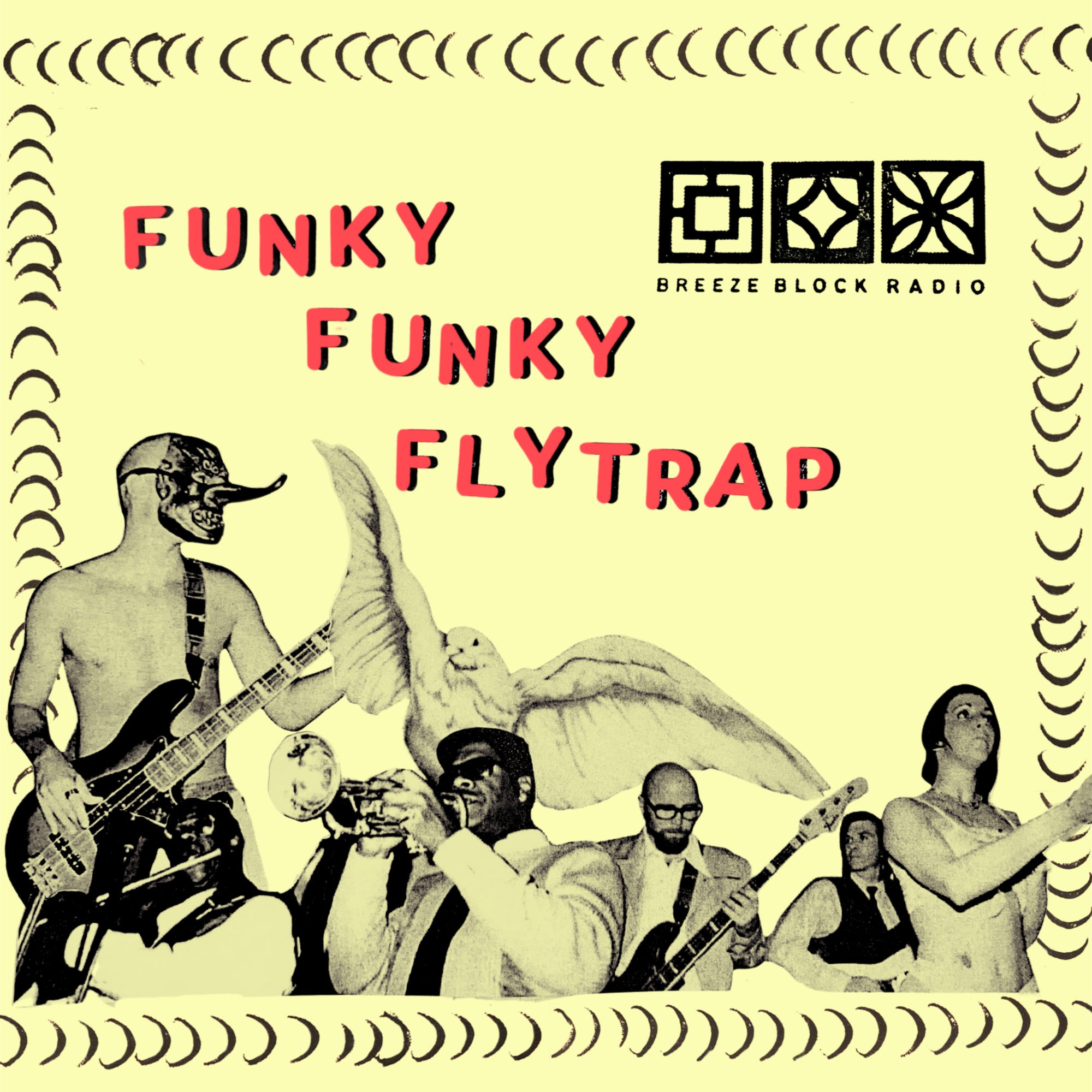
Episode 2 of Breeze Block Radio is locked and loaded for your listening this Friday at 5:00pm HST live on Neocities.
But, before there was BBR, there was DBS.
Double-Barreled Soul on KTUH 90.1 FM was the genesis of DJ Aunteh K. Switch some of the letters around, and take some away:
AUNTEH K —> U T H K—> KTUH
My humble origins in radio broadcast began at the University of Hawaiʻi college radio station in 2021-22. A silly crush brought me there, but it became a serious way for me to do music at a time where live music hadn’t been happening re: coronavirus pandemic.
I even wrote my master’s thesis about mutual aid and radio; Insurgent Airwaves: Radio as a Model for Alternative Futures.
Double-Barreled Soul was primarily a funk/jazz show that was a play on my father’s band, “OO Soul” (pronounced “double-oh-soul”) and Brother Jack Mcduff and David Newman’s 1967 record by the same name.
A majority of the music I curated on that program were recommendations from my dad—who is my muse in many ways. Every person who meets him thinks he’s the coolest person they know, and its 100% effortless. 100% pure poison. It’s his je ne sais funk.
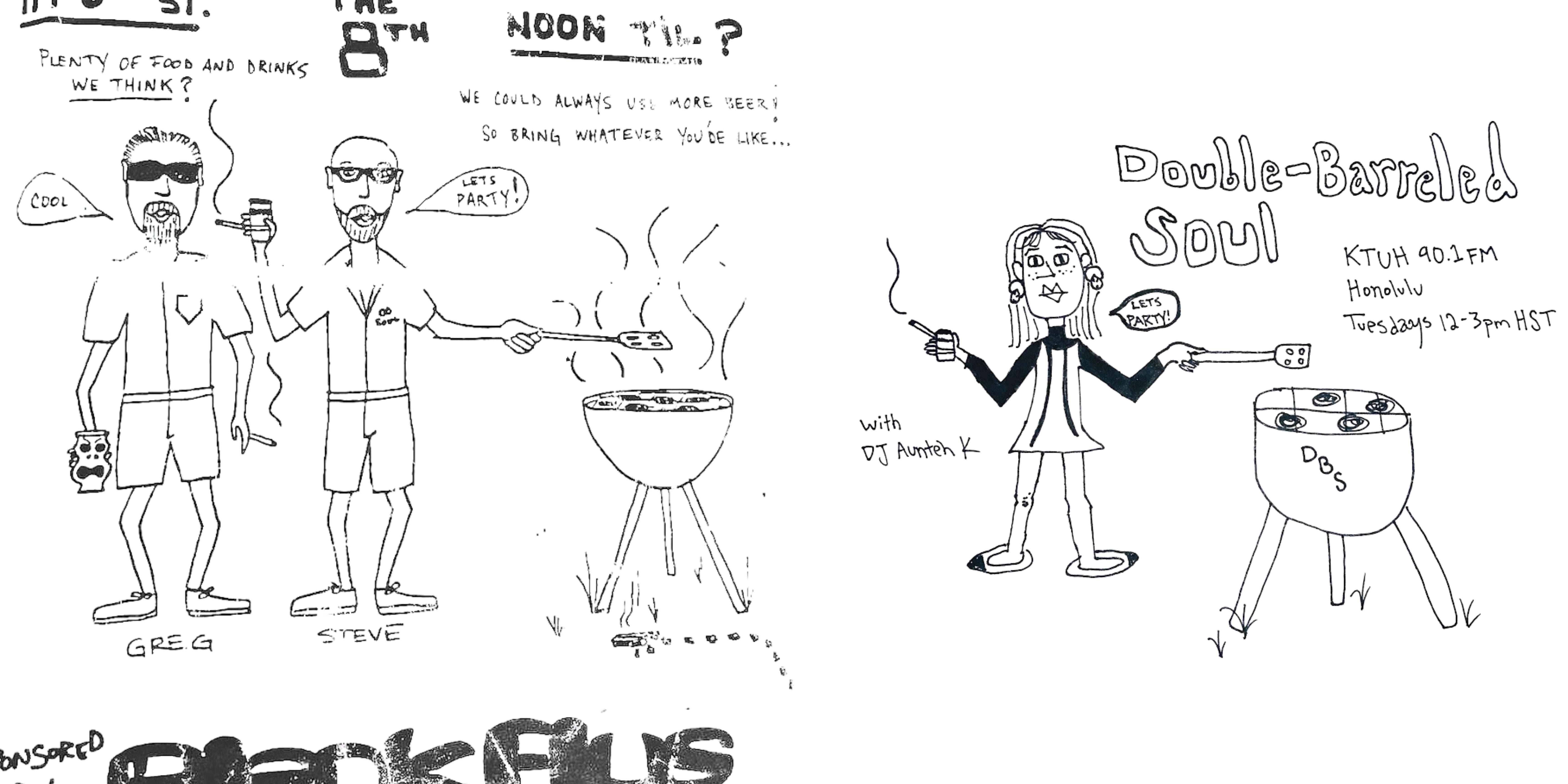
I always wanted to be as cool as my dad. He knows everything there is to know about what’s hip, the histories behind his favorite sounds, makes and models of instruments, antique furniture, and all forms of hustling. Today, he enjoys walks in his local graveyard where he can Google the names of the dead and read their life stories. The coolest to ever do it.
To this day, my selections and compositions are highly influenced by the grooves he digs the most. Because I dig them too, and funk is my lifeblood.
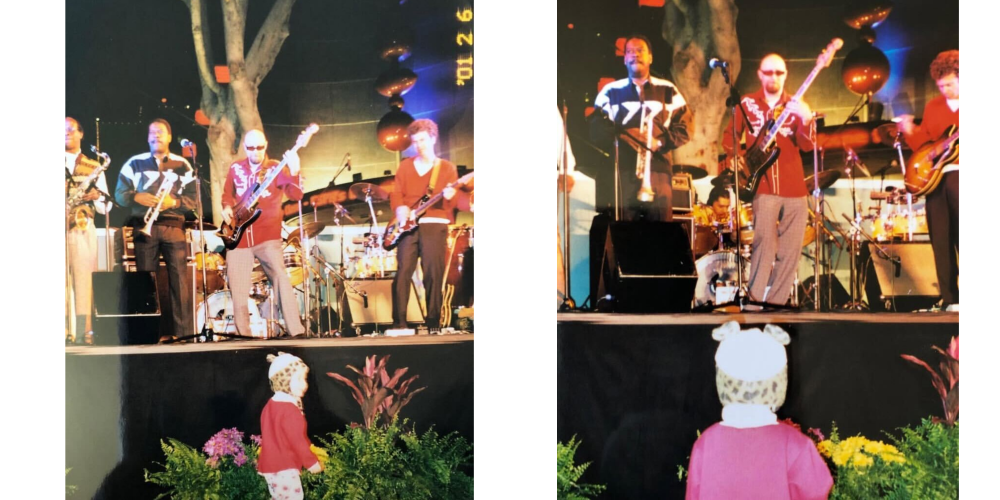
I grew up going to my dad’s gigs in Long Beach, California. I must have caught the funk bug in my mama’s belly. This is the style of music that feels most familiar to me, and I never don’t want to hear it. Like many genres of music, its boundaries are controversial. What is real funk?
In the show I narrow it down to a few characteristics I look for when I’m digging for the kind of funk that I like:
1.) A nasty bass line (mandatory).
2.) A wicked change. It’s the element of jazz that seeps in through the foundations of funk. When it takes you someplace unexpectedly—musically—and resolves back to where you started, that’s what I’m talking about.
3.) Lyricism and poetic forms informed by the blues. I think some great examples of this are James Brown and The J.B.s and Gil Scott-Heron. To be informed by the blues means to circle back to the hook in a certain type of storyteller way, and it can be as complex as The Revolution Will Not Be Televised to as simple as “pass the peas like you used to say”.
Bonus points:
- staccato “popcorn” horn lines (heavy with the barry sax). A James Brown-ism. See Mother Popcorn.
- Afro-Latin percussive grooves and rhythms that make room for auxiliary percussion instruments to shine. Like congas, timbales, pandeiro, etc.
- Soloing that makes you wanna stand up and testify. Flute, vibraphone, & Hammond B3 organ especially.

Famously said by the bass player behind Motown’s iconic sound and 23 of their number one hit songs, James Jamerson.
Sometimes, I announce this phrase to a crowd when I’m spinning vinyl I didn’t clean properly.
He was a double bass jazz musician who became known for his session work and pioneering sounds on the Fender precision bass. Jazz influenced his electric bass style from his technique to his complex melodic runs to his improvisational approach. Opting to use open strings and playing with only his right index finger a.k.a. “the hook”, were both jazz double bass techniques that informed his signature funk style.
Jamerson never replaced strings unless he broke one, and he continued to *send it* when the neck on his pea bass started to bend. Whereas most bass players would hang their heads in jazz shame to maintain their instruments this way, Jamerson believed it improved the quality of the tone. He preferred a warm sound with full volume and half treble on the pea bass. No pedals, no synthetic effects, no frills.
Perhaps, the grime of real life is the only effect he needed.
A textured past informs the style and the sound that people crave most. When it comes to funk, people want to hear the dirt. Even the vernacular within the world of funk is dirty. “Squeaky clean” or “polished” funk sounds insulting. Even racist?
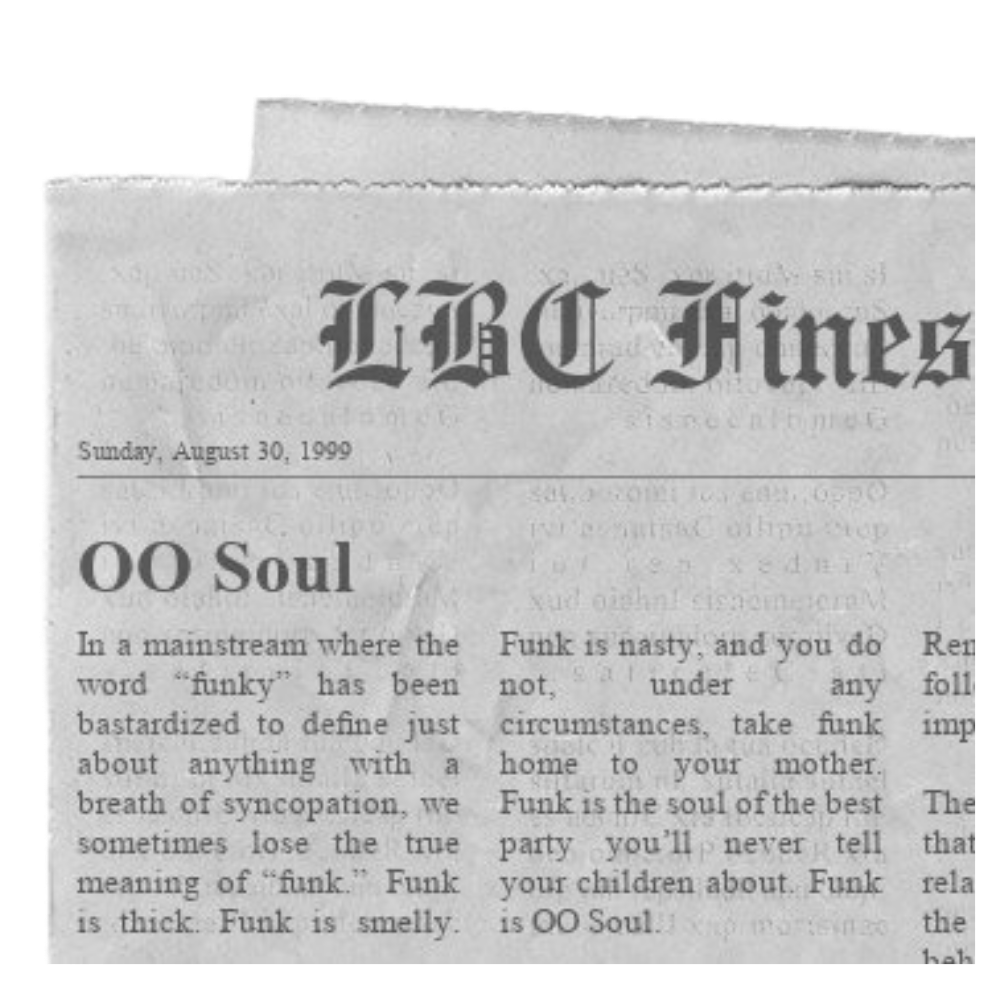
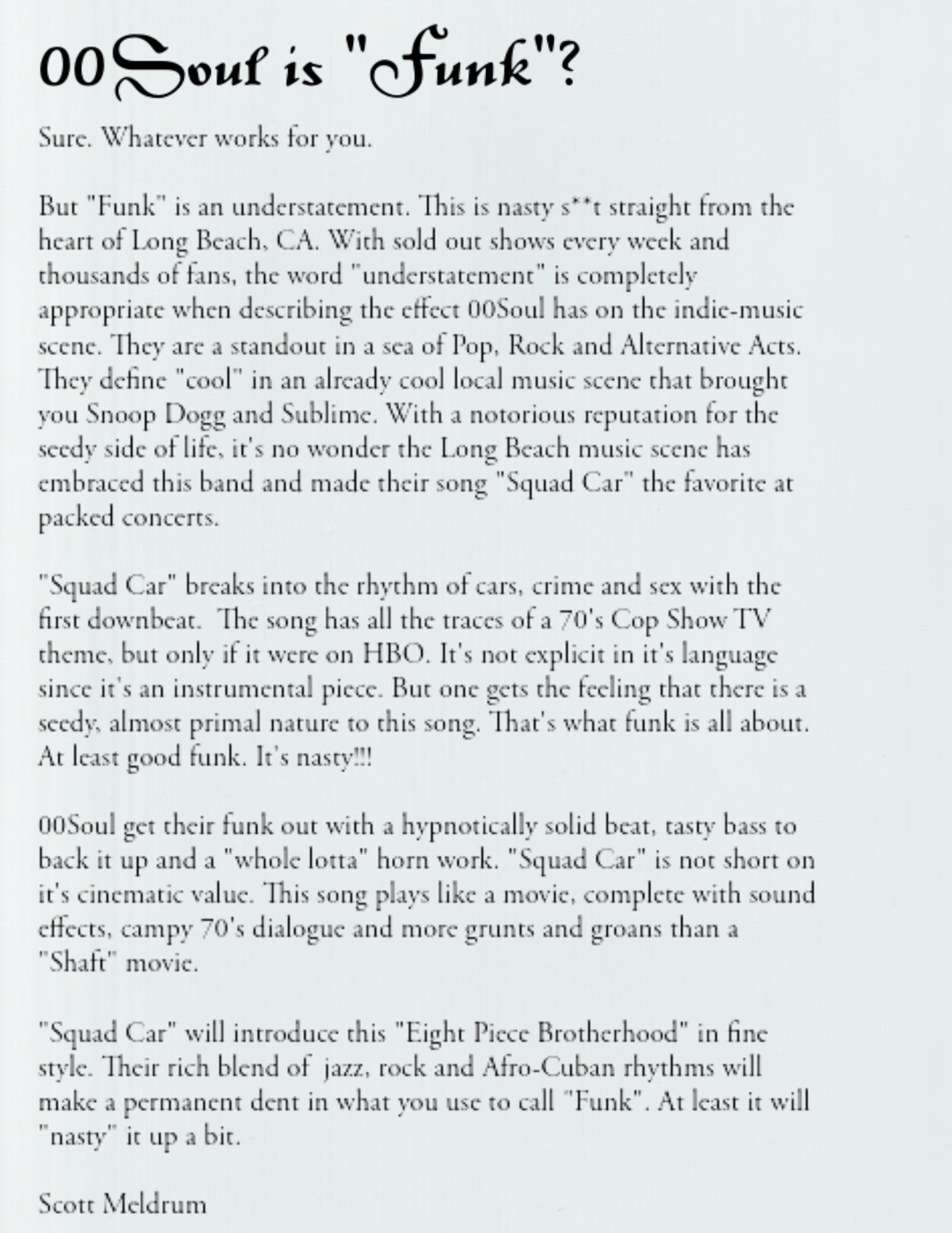
Proper compliments range from “disgusting”, “filthy”, or “nasty”. The highest form of praise, of course, being the “stank face”. We see this show up in lyricism like Somethin’ Stank by George Clinton of Parliament Funkadelic, or “stank you smelly much” from Andre 3000’s Prototype. I found more examples of this by music journalists in the late 90s and early 2000s doing album and concert reviews for OO Soul using the same language to incite interest from readers:
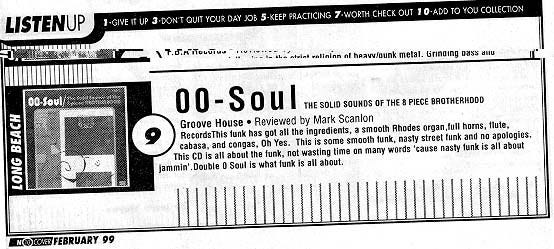
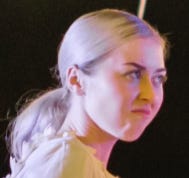
You can lie when someone asks if you liked a song, but you can’t hide a stank face.
It is one of many instinctual movements you get when the groove hits you. I should add it to my funk checklist from above. As a musician, you only receive stank face when you’re doin’ it right. And that applies to jazz too.
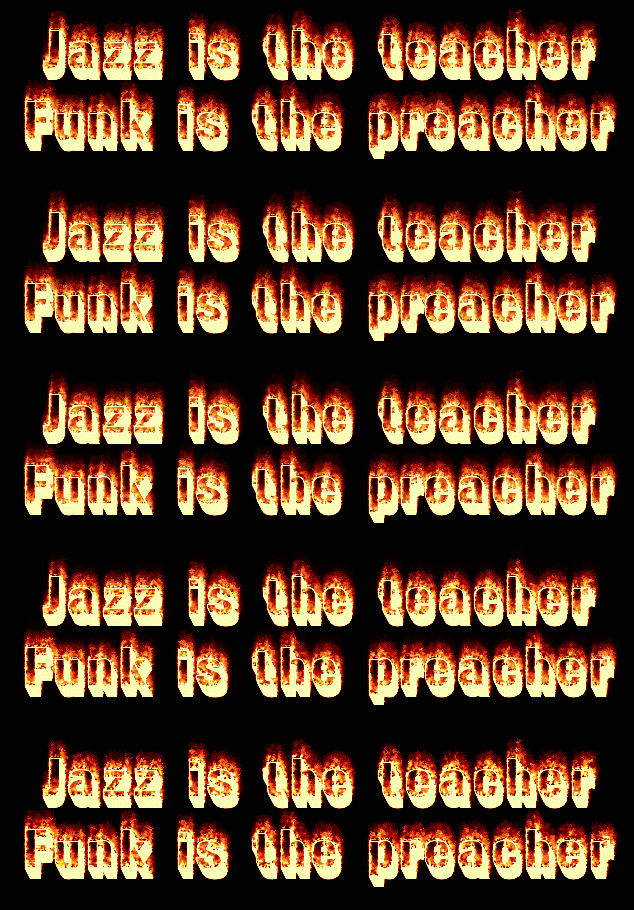
If jazz is anarchism, what is funk?
Jazz is the balance of form, structure, and preparation in an infinite dialogue with the free flow of improvisation. The kind of funk we are listening to continues that tradition in many ways. Several of the most well-known funk and reggae musicians were jazz players first. From James Jamerson to The Wailers.
Perhaps funk began as an iteration of jazz. It certainly doesn’t lack the improvisation or the heat. Over time, certain people always find ways to over-simplify and reorganize hierarchy into things that were born to dis-identify from it. To de-radicalize and commodify insurgent forms of art. Many times, for the sake of profit. Perhaps funk was a movement in response to that kind of attack on jazz?
When you look at the timeline of jazz, the later Afro-futurist and spiritual jazz sounds of the 70s and 80s overlap in ways that make the styles almost indistinguishable from one another. I think of artists like Herbie Hancock, Roy Ayres, Chick Corea, and Wayne Shorter.

1.) For Real – Flowers
2.) Does Your Mama Know – Rudy Love & The Love Family
3.) Whatcha See Is Whatcha Get – The Dramatics
4.) Electric Surfboard – Brother Jack Mcduff
5.) Crossword Puzzle (alternate version) – Sly & The Family Stone
6.) Summertime – Rosa King
7.) Windy C – 100% Pure Poison
8.) Chance 4 Peace – Lonnie Liston Smith
9.) More Mess On My Thing – Poets of Rhythm
10.) Aint No Trouble On The Mountain – Richard “Groove” Holmes
11.) Intandane – Philip Malela, The Movers
12.) Sweetback – Ivan “Boogaloo” Joe Jones
13.) Slippin’ Into Darkness - WAR
14.) Musicawi Silt – The Daktaris
15.) Rui Totoka – Sakiusa Bulicokocoko
16.) Look A Py-Py – The Meters
17.) Breezeman – Cymande
18.) Future Shock – Curtis Mayfield
19.) Gun – Gil Scott-Heron
20.) Watermelon Man – Mongo Santamaria
21.) Fat Cakes – Jimmy Mcgriff
22.) Cuba Libre – OO Soul
23.) Freedom Road – The Pharoahs
Honorable mentions:
“Intandane” - Philip Malela, The Movers
Next Stop…Soweto Vol. 2: Soultown. R&B, Funk, & Psych Sounds from the Townships
1969-1976.
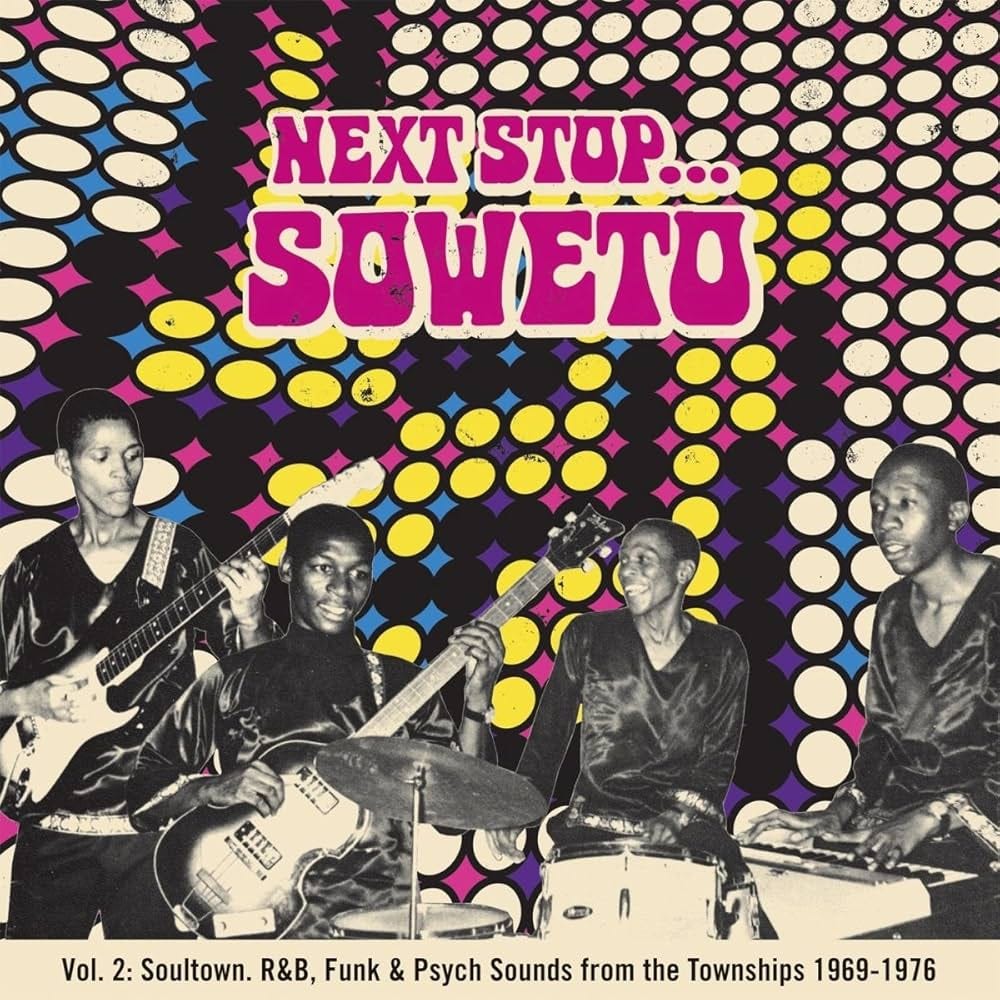
In the show, I talk about how this record sent me into a deep dive on this history of townships in South Africa. I recently absorbed a donated record collection from an anthropologist with several African LPs with the words “township” and “Soweto” in the titles, band names, and compilations. It is an excellent topic for this show to wrap up the 2025 Black History Month.
Townships are areas on the outskirts of a town or city in South Africa designated under apartheid legislation that have historically been used to uphold racially segregated communities that were constructed by forcing Black Africans out of their homes. They lack adequate infrastructure and services, and Black African people were strategically forced there so that they could provide cheap labor for cities.
Townships still exist today, and Black South Africans live with the consequences of this racist history in their communities; surviving poverty in apartheid’s afterlife.
Soweto (South-West township) is a large township near Johannesburg that became a symbol of resistance against apartheid—and where the tracks off this compilation originate from. Nelson Mandela lived in Soweto during the peak of his anti-apartheid activism prior to his imprisonment. Today, it is home to the Nelson Mandela National Museum.
In 1976, an estimated 20,000 Black school children participated in the Soweto Uprising in response to the Afrikaans Medium Decree in 1974—around the time that a majority of the music from this episode was released— which forced all Black schools to use Afrikaans and English as languages of instruction in an attempt to erase Indigenous languages like Zulu.
Afrikaans was thought of as the “language of the oppressor” as stated by Desmond Tutu, as it was highly associated with Apartheid, and about 90-95% of its vocabulary is of Dutch origin.
An estimated 200 school children were shot and killed by police during the Soweto Uprising and an estimated 700 fatalities in total.
It’s critical to tell these stories in tandem with the music that represents them. I want to give respect where respect is due: to the people of Soweto and their fight for freedom.
“Cuba Libre” - OO Soul
Till The Lights Come Up, 2008
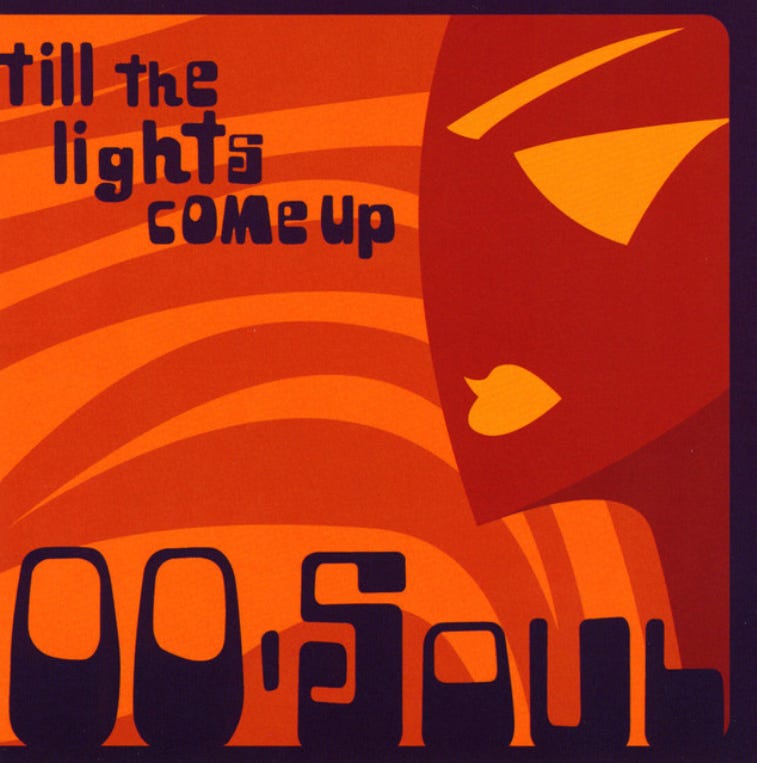
This is track 4 off OO Soul’s third and final record. I feel that the popularity of this kind of music in Southern California followed the revival of Nigerian-style Afro beat (like Soul Explosion) that emerged with labels and bands in Brooklyn, New York.
Around the time that this album released, the scene had been popping enough to pack seedy clubs with 500+ people, and to host festivals in the city that brought in other Blue Note-esque acts from the funk world.
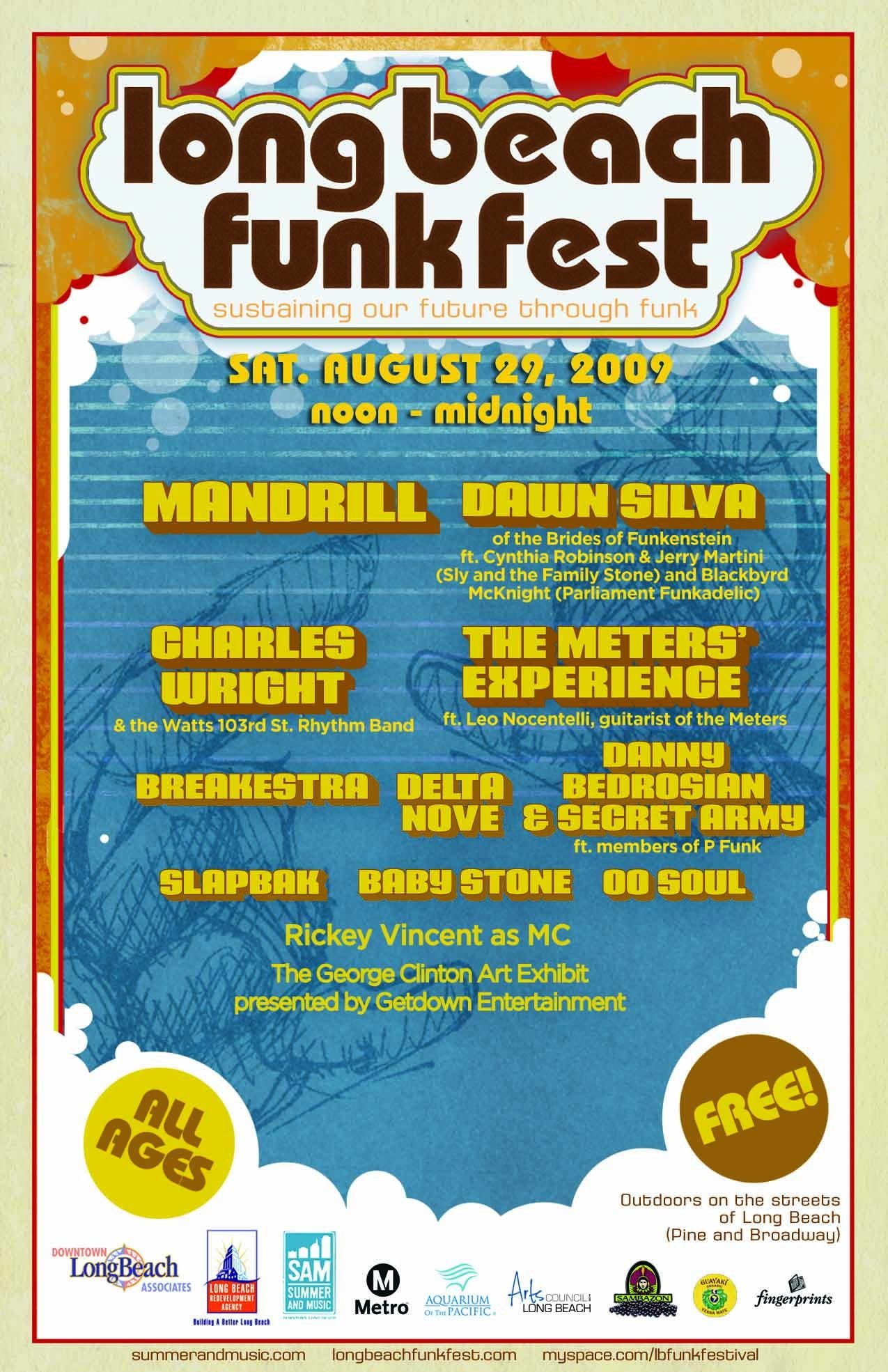
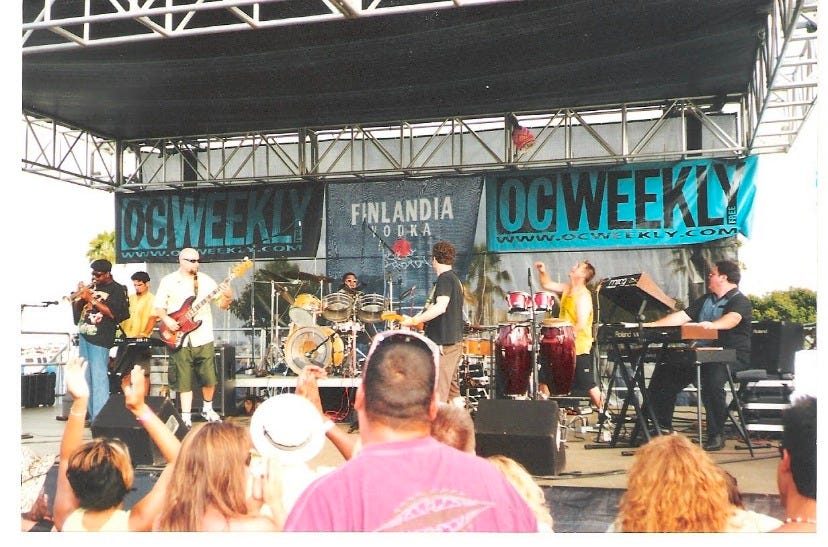
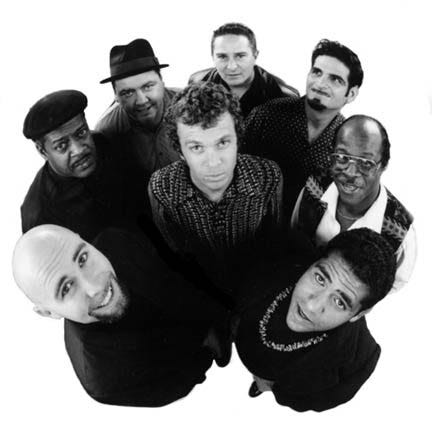
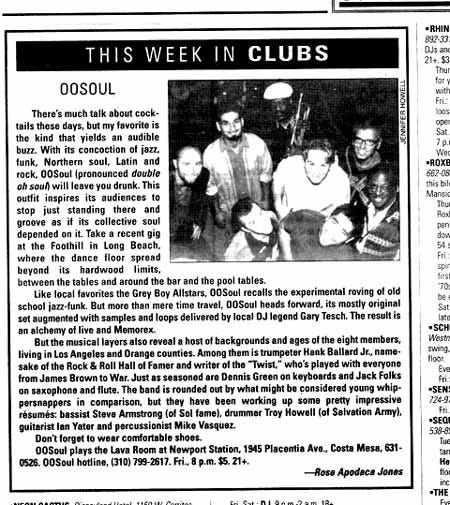
OO Soul’s music is known for its horn-heavy instrumentals, dancefloor grooves, and Latin flair. Cuba Libre sits on the Latin side of the group’s signature sounds with jazzy horn solos, vintage samples, and a singing bass that grounds every moving part in it’s orbit. This is one of the OO Soul tunes I vividly remember watching live as a little one.
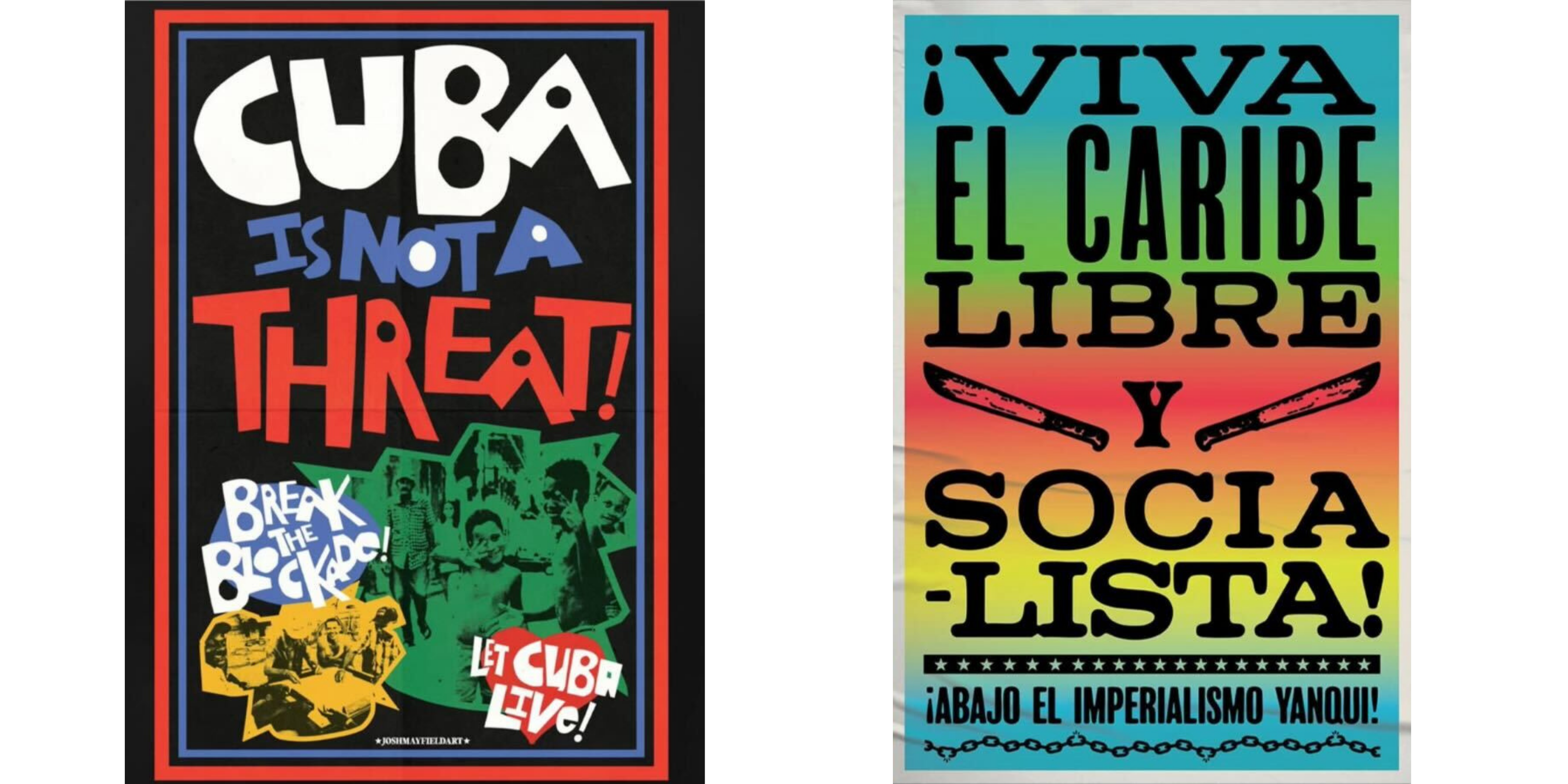
The selection of Cuba Libre sends a relevant message at a time where 66+ years of U.S. sanctions enforced on Cuba have exponentially increased the force of it’s imperial strangle following Donald Trump’s recent fuel embargo crackdown. Tariffs and militaristic hostility are threatened against any nation sending aid to the island. The people of Cuba are getting sick from the amount of trash piling the streets due to the lack of fuel for garbage trucks. It has created a full-blown crisis for the 11 million Cubans living there. Free Cuba! Free Guåhan! Free Hawaiʻi! Free Sudan! Free Palestine! Destroy the empire!!
On the horizon:
Enjoy the selections of Funky Funky Flytrap for the February edition of Breeze Block Radio, live on Neocities. And later, on Mixcloud.
This Friday 2/27 at 5:00pm HST on Neocities.
This Sunday on HPR-1, my debut as the host of Hawaiʻi Public Radio’s new music program, HPR Hōʻike. This program airs past performances of local artists recorded at the Atherton Performing Arts Studio with a live audience. This Sunday, the program will feature a 2025 performance by Honolulu Jazz Quartet (with yours truly on vocals).
This Sunday 3/1 from 1:00-2:00pm HST on Hawaiʻi Public Radio
The recurring live radio style roots reggae event, Island Pulse at Capitol Modern, will be partaking in the celebration of patriarchy-survivors this March. Come witness Pretty Gyal Posse (Maryanne Ito, REXIE, Miss Lulú, and myself) step pon di mic inna rub-a-dub style. An international celebration of women pioneers in reggae music (flyer coming soon).
Friday, March 20th, at Capitol Modern from 6-9pm
After Island Pulse, I’m supporting my friends in the band, Iliad, at their single release party for the song “Waiting”. I will be on stage after 9pm in some sort of chill combination.
Friday, March 20th, at Harbor’s Vintage around 9

In solidarity,
Kelsea